
Object story · Horror, Adaptation, and Strange Fiction
Misery Loves Company.
The first Stephen King novel that took hold, the first signed collectible book I bought, and the shelf that followed.
Why this object
The book read too young, and returned to later.
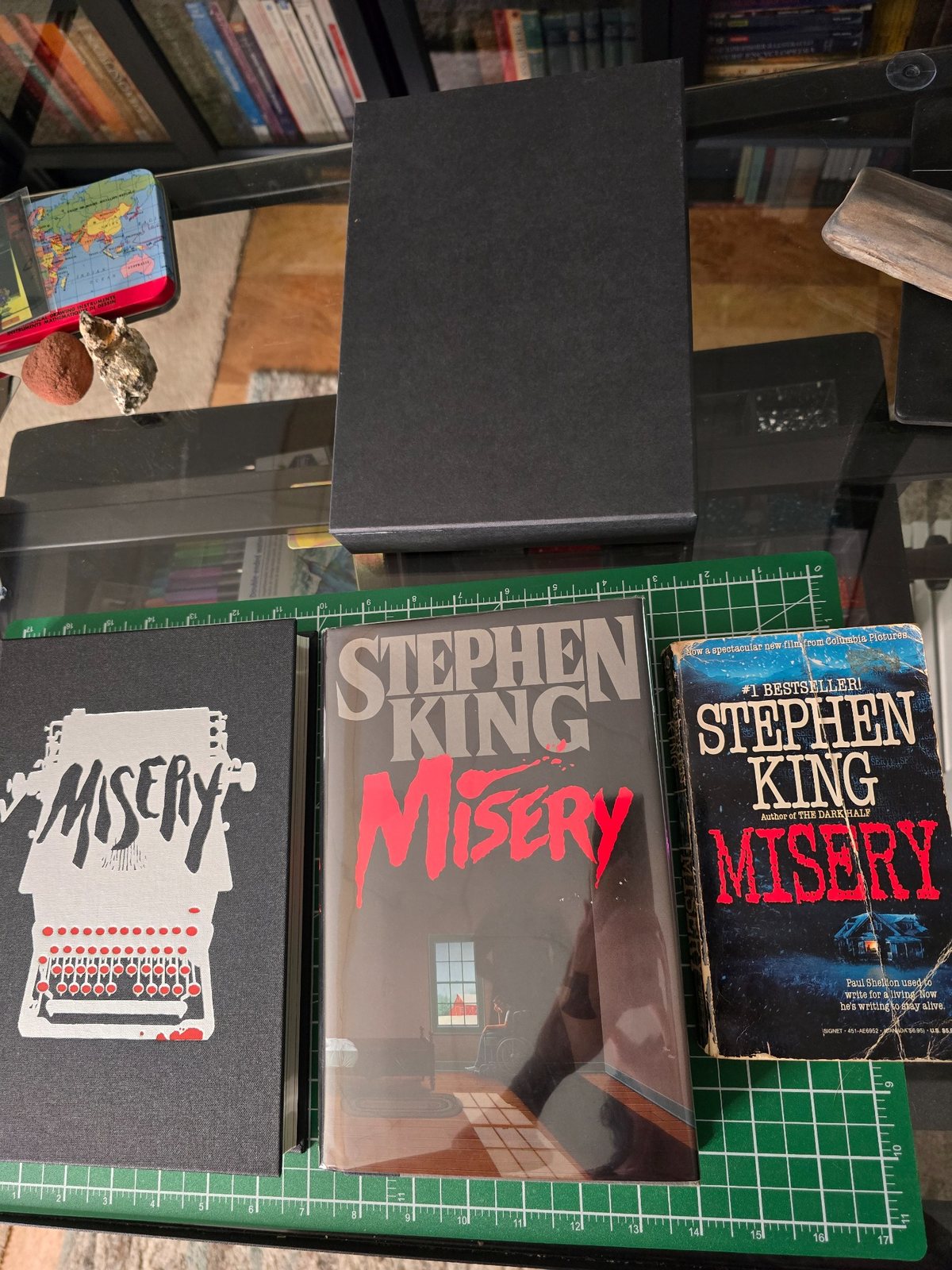
This signed first edition of Misery was the first major collectible book I ever bought. It was a difficult purchase to justify, because it cost real money, but it also made a strange kind of sense. Misery was the first Stephen King novel I read as a child, and the one that stayed.
I was young enough that I remember reading it secretly on a school staircase after telling a teacher I was going to the bathroom. That was probably too early for Misery. It was definitely too early for a lot of Stephen King. But I was hooked.
Part of the hook was fear. Part of it was the book itself. And part of it was recognition. As a child, I understood something about Paul Sheldon being trapped by someone volatile, unpredictable, and powerful. My childhood was shaped by abuse, and I often felt trapped and hopeless in ways I did not yet have language for. Misery gave me a story where captivity was real, terror was real, and escape was still possible.
My own escape was less dramatic than Paul’s. I left by joining the Army and moving across the country as soon as I legally could after graduating secondary school in 1999. But the emotional shape of the story mattered: trapped does not always mean forever.
The first signed book
A serious purchase, and a lesson in provenance.
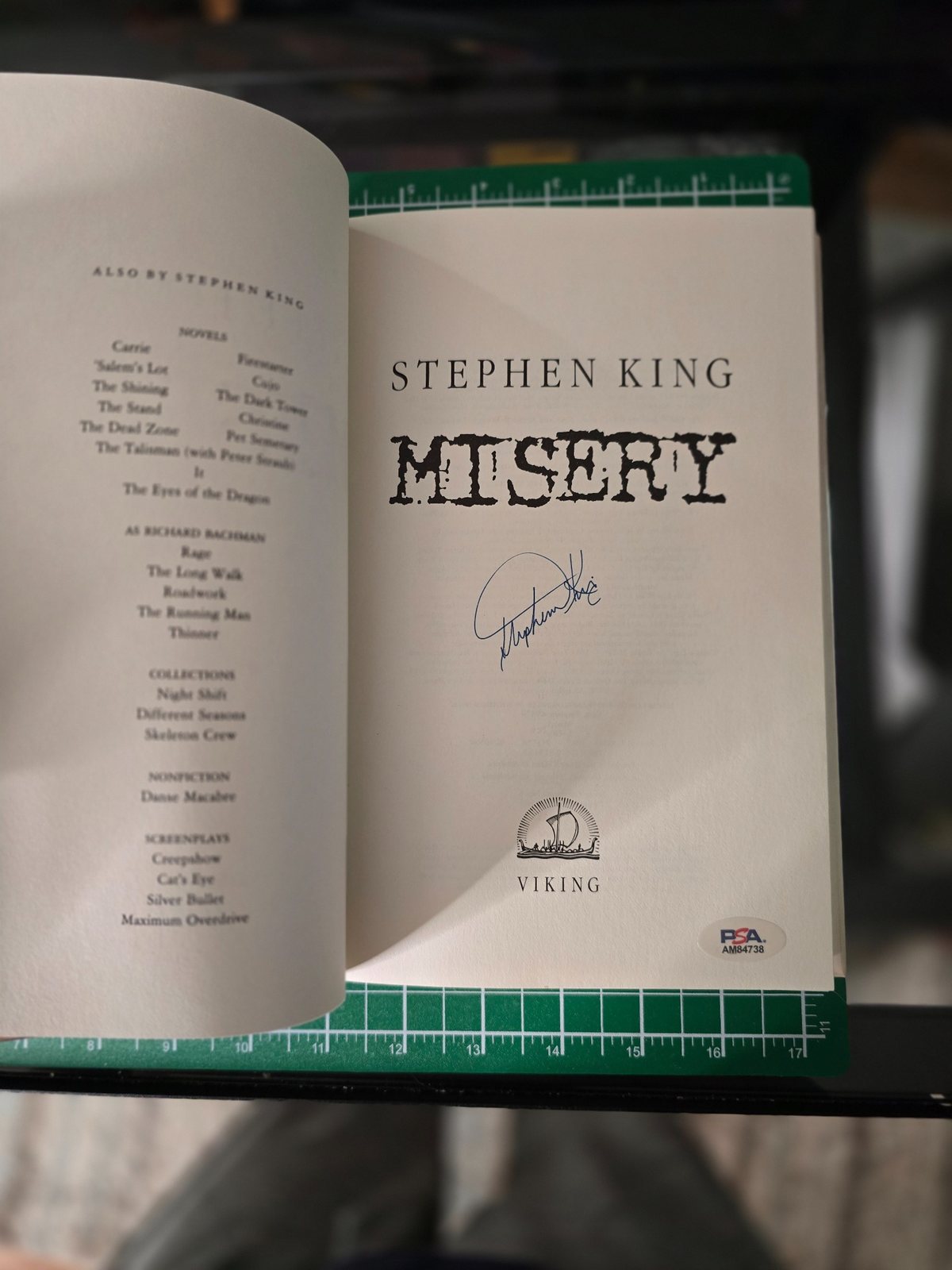
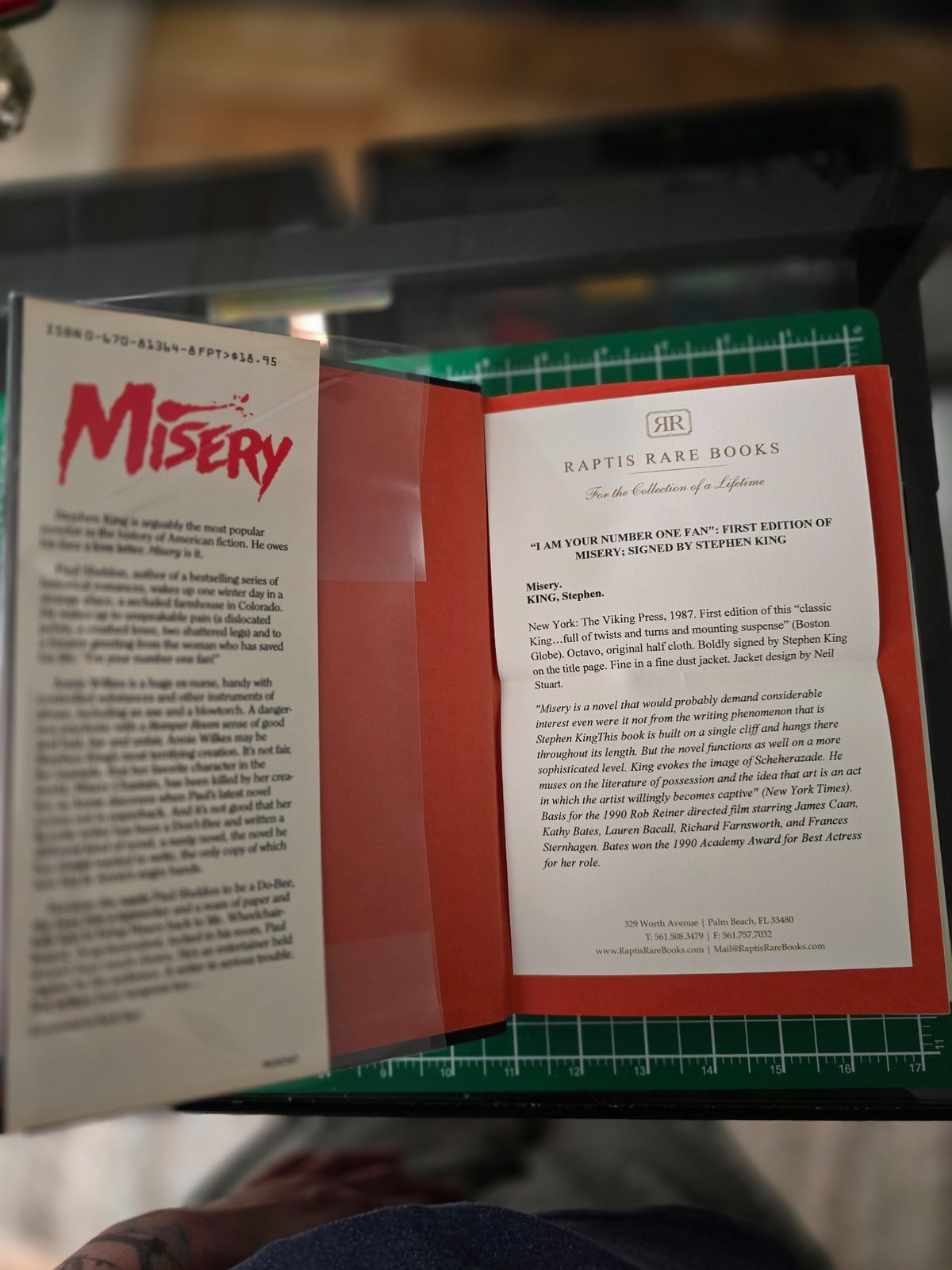
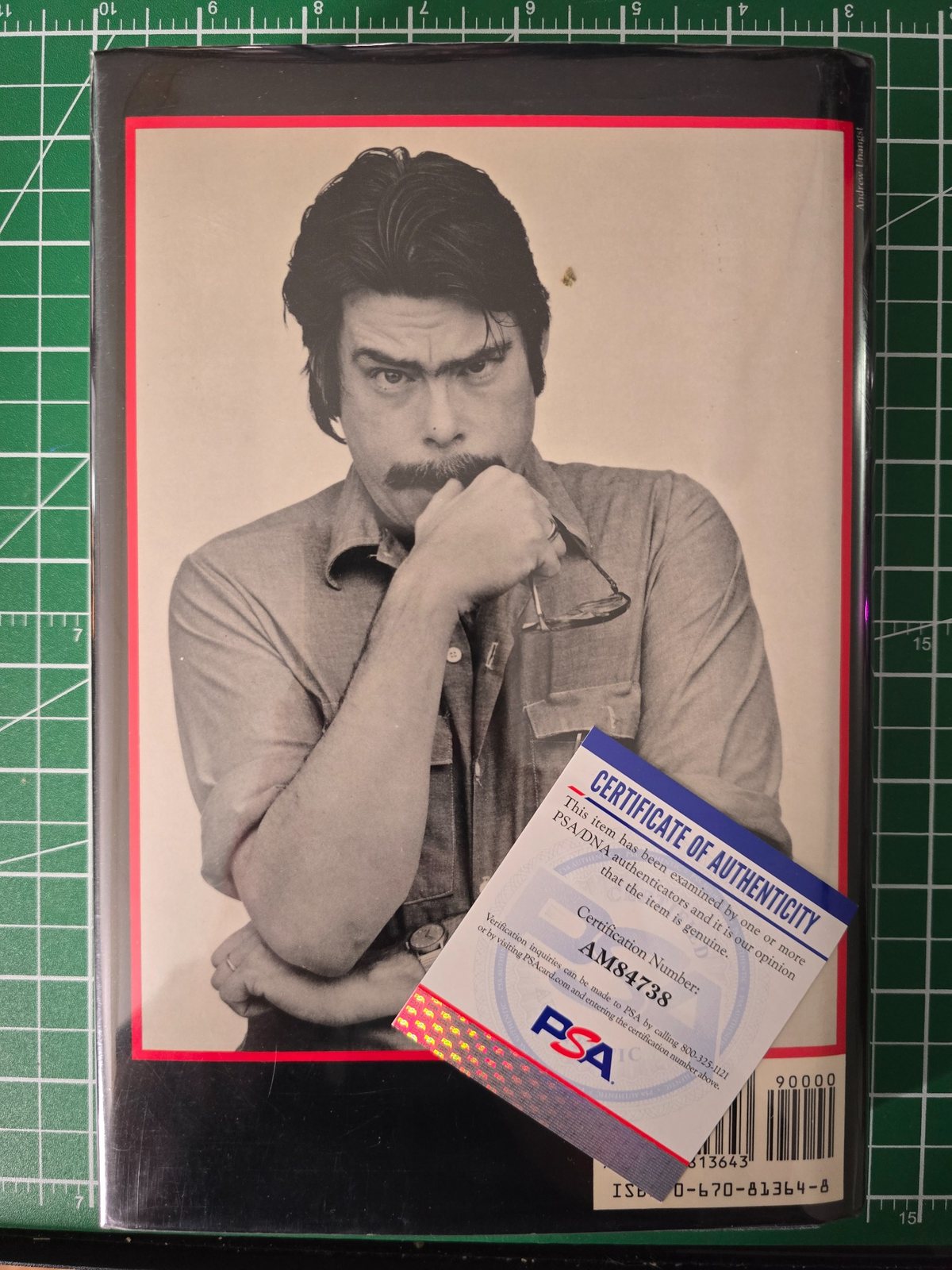
Buying this copy was my first serious step into signed and collectible books. It came from Raptis Rare Books with seller documentation, and it also carries a PSA authentication sticker and certificate. I wanted to believe I was buying something real: a first edition of the novel that had followed me from childhood into adulthood, signed by the author who wrote it.
Later, some collectors questioned the signature, and I learned that authentication can be more complicated than a certificate or a seller description. In this case, the PSA certification may even make some collectors more skeptical rather than less. I still lean toward believing the signature is genuine, but the uncertainty became part of the object’s meaning.
This book taught me to ask better questions. Where did the signature come from? What is the chain of custody? What kind of provenance exists beyond a sticker or a listing? What does a seller know, and what do they only believe? That lesson changed how I collected afterward.
Provenance
The paper trail, the question mark, and the point of asking.
Authentication is not the whole story
A certificate can document a claim without settling every doubt.
The certificate belongs with the book because it is part of the object’s history. So do the doubts. A personal archive can hold both at once: the hope that the signature is real, the evidence that came with it, the skepticism that arrived later, and the changed collecting habits that followed.
That is why this page is not an authentication argument. It is an object story. The important thing is not only whether the signature can be defended to every collector’s satisfaction. It is also what the purchase revealed about trust, desire, expertise, risk, and the stories sellers and buyers tell around signed things.
Reading copies
The copies that came before and after.
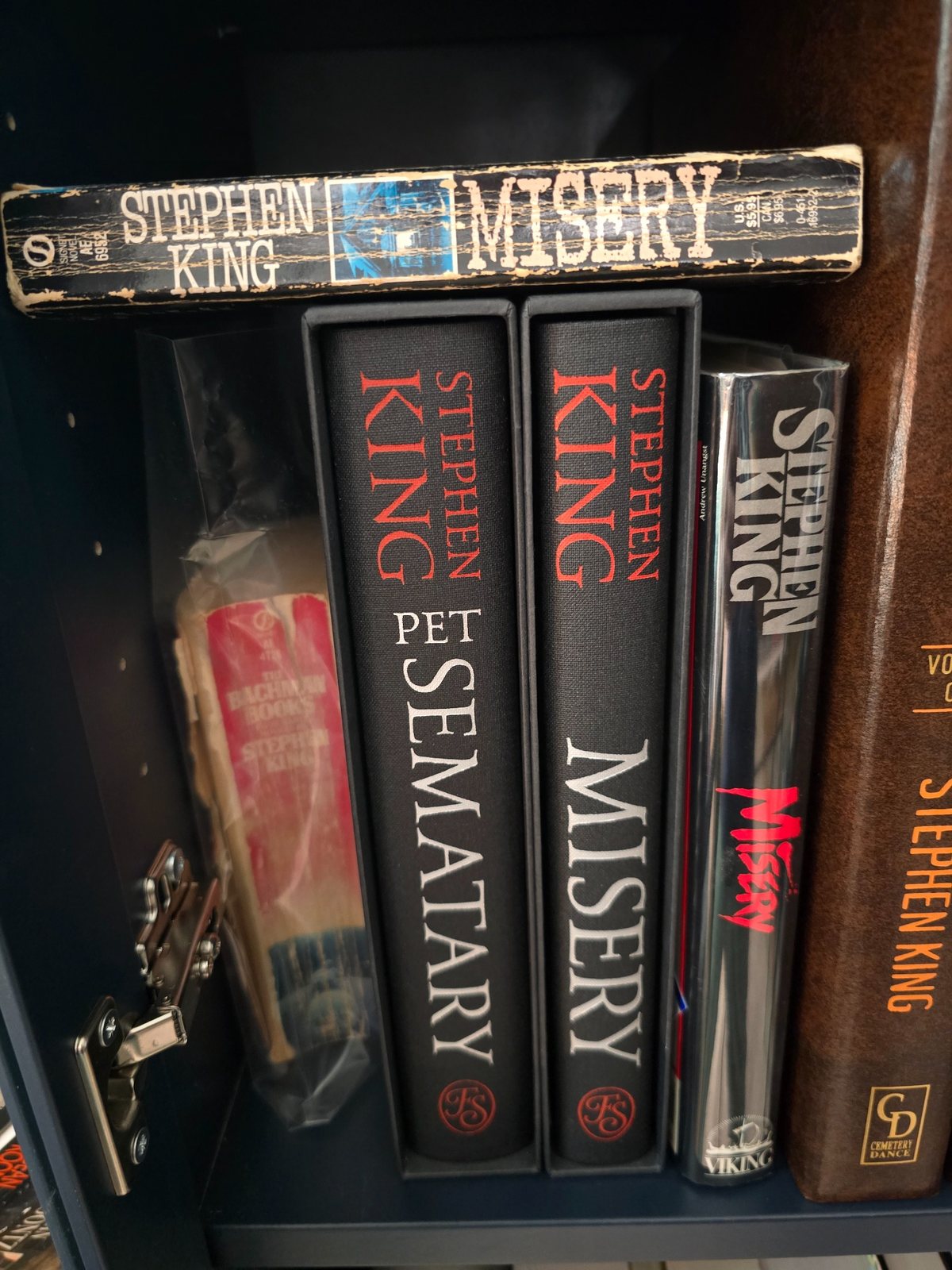
The signed first edition is not my only copy of Misery. The paperback is the third or fourth copy I have owned. Earlier copies were read until they fell apart. This one was bought in Nova Scotia after the childhood and teenage copies disintegrated from overuse.
I also have the Folio Society edition, unsigned but beautifully illustrated. Together, the copies tell a better story than any one of them could: the book read too young, the book reread until it broke, the book bought as an adult object, the book preserved as a collectible, and the book that still explains why this shelf exists.
Appears in